October 26, 2026 · 2 min read
How NASA rethought light on the Space Station, and what it means for your bedroom
Astronauts see about 16 sunrises a day. To help them sleep, NASA replaced the station’s lights with LEDs that change colour through the day. Your home never got that upgrade.
Astronauts on the International Space Station circle the Earth about every 90 minutes. That’s roughly 16 sunrises and 16 sunsets a day, and it wrecks the light signal the human body uses to know when to sleep. Sleep is one of the most studied problems in spaceflight for a reason.
NASA’s fix: light that changes with the day
Starting in 2016, NASA began replacing the station’s fluorescent tubes with Solid-State Lighting Assemblies: LED panels that can shift their colour and brightness. Crews get bright, blue-enriched light when they need to be alert, and a dimmer, blue-depleted “pre-sleep” setting in the evening, so the body gets a clear signal that night is coming.
The idea comes straight from circadian science. A sensor in the eye called melanopsin, most sensitive to blue-green light around 480 nm, tells the brain what time it is. Give it blue-green light and the brain reads “day”. Take it away and melatonin can rise on time.
The most advanced bedroom humans have built isn’t on Earth. It’s orbiting it, and its main feature is a light switch that knows what time it is.
Why Mars missions care even more
A day on Mars, a sol, lasts 24 hours and 39 minutes. In the Mars-500 study, six men spent 520 days in a sealed mock spacecraft in Moscow; several drifted into disrupted sleep and activity patterns over the mission (Basner et al., PNAS, 2013). Getting light right isn’t a luxury for long missions. It’s life support for the body clock.
Your home is still on the old lighting
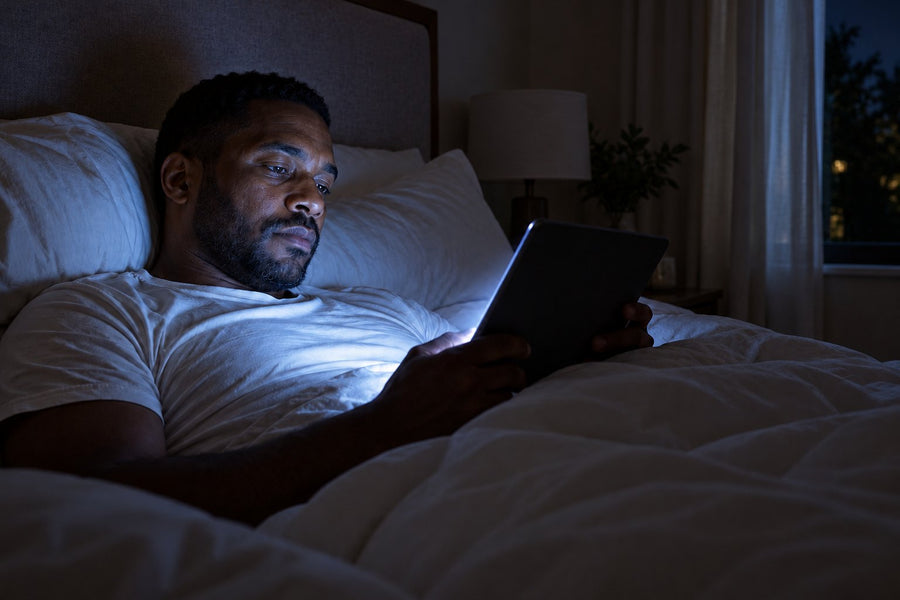
Most homes run one setting all evening: bright, white, blue-rich LEDs, plus phones, laptops and TVs. There is no pre-sleep mode. The light that tells your brain “afternoon” keeps pouring in until the moment you close your eyes.
A pre-sleep setting you can wear
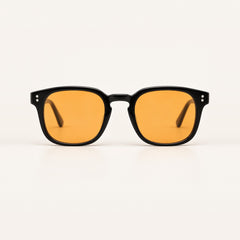
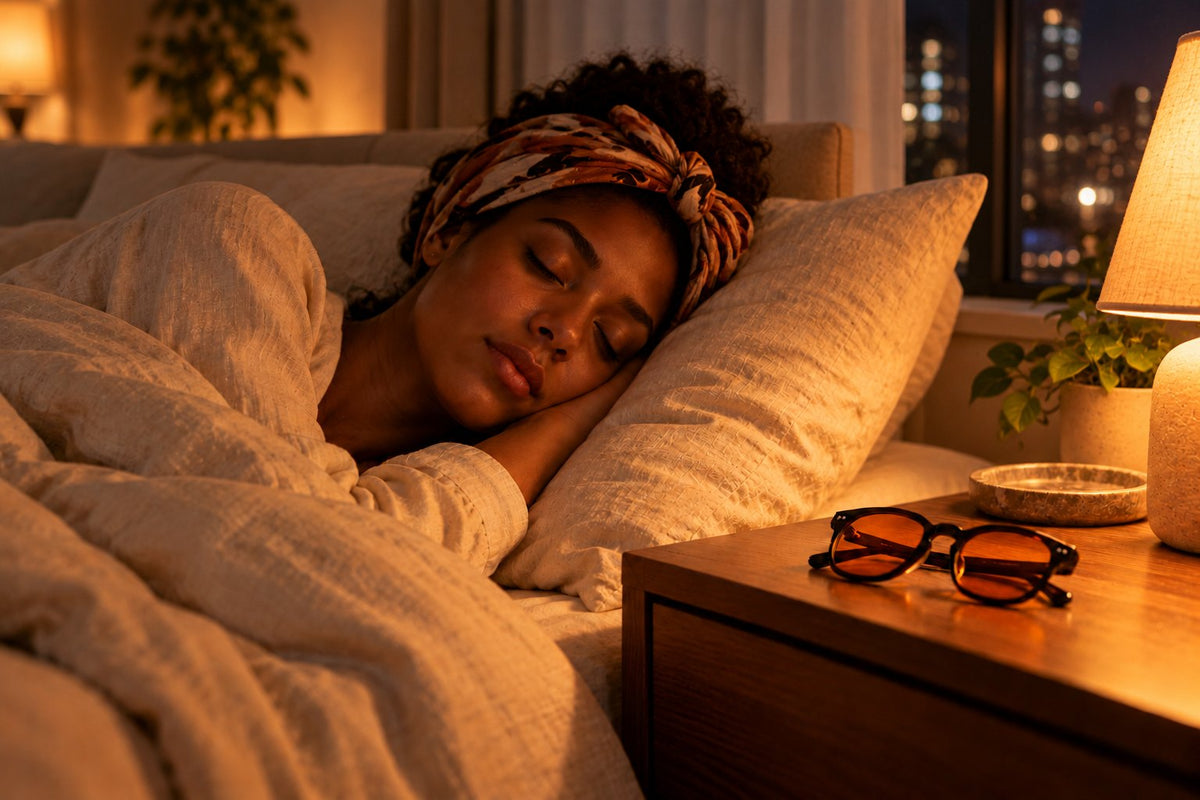
You can’t rewire the house, but you can filter what reaches your eyes. Noctis night lenses are rated to block 99% of light from 400 to 550 nm, the blue-green band the station’s pre-sleep mode turns down. Put them on two hours before bed and everything around you, screens included, becomes evening light. For daytime screen work there is Sol, a pale yellow lens that softens harsh blue without changing how colours read.
That’s the whole idea behind Maison Marsani, and the reason our frames carry the names of places on Mars: borrow the thinking built for space, and use it in your own bedroom. Try it for 30 nights.
Sources: NASA, Solid-State Lighting Assemblies on the International Space Station (from 2016) · Lucas RJ et al., Trends in Neurosciences, 2014 · Basner M et al., PNAS, 2013.