


01 · Sleep
Tired turns into asleep
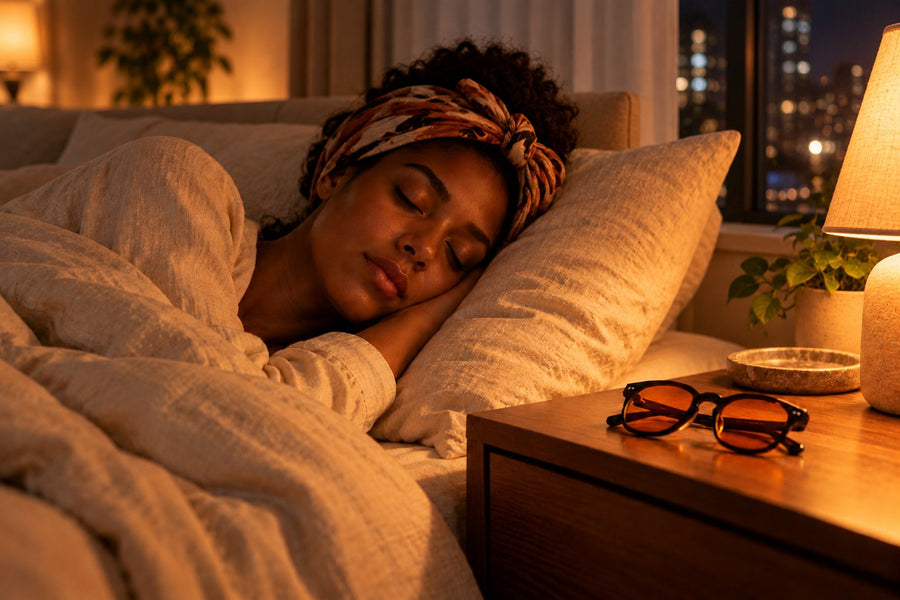
Without the daytime signal, melatonin rises on time, so lying in bed stops being a waiting room.
Your cart
0 items
Your cart is empty.
Start with the pairs most people pick.


Arcadia Planitia · 46.7°N 166.0°W
Basalt acetate · Sol day lenses
Day lenses for screens and bright light.
Frame · Basalt
Your eyes work a 10-hour screen shift. Sol lenses filter up to 90% of the high-energy blue light from screens and LED panels, with a soft yellow tint that keeps colours readable at your desk.
Arcadia is a rectangle, rivets frame in polished black acetate. A clean rectangle for wider faces.
Pair it with the matching Noctis night lenses in the Day + Night set and save.
Arcadia Planitia · 46.7°N 166.0°W. Smooth plains with water ice just under the surface, one of the shortlisted sites for the first crewed landing.
Wear Sol at your desk, on long screen days and under bright LED panels. Swap to Noctis two hours before bed.
A clean rectangle for wider faces.
Your frame with lenses fitted, a hard case, a microfibre cloth, and a blue-light test card so you can see the block for yourself.
Free tracked US shipping, 5–8 business days.
30-night guarantee: start a return within 30 days of delivery for a full refund.
Sound familiar?
Small habits, big nights. This is where tomorrow’s energy is decided.
90%
About 90% of Americans use a phone, laptop, TV or tablet in the hour before bed at least a few nights a week.
National Sleep Foundation · Sleep in America Poll · 2011
1 in 3
About one in three US adults regularly sleeps less than the 7 hours their body needs.
CDC · Morbidity and Mortality Weekly Report · 2016
1.5 h
Reading on a light-emitting tablet before bed pushed melatonin back by over 90 minutes and left people less alert the next morning.
Chang et al. · PNAS · 2015
Not all orange is the same
Most blue-light glasses look alike in a photo. Here is what is actually different.

99%
of 400–550 nm blocked
10–30%
clear lenses, 400–450 nm only
What changes
Without the daytime signal, melatonin rises on time, so lying in bed stops being a waiting room.

A body clock that isn’t pushed later by screens means the alarm stops feeling like 4 am.

Sol takes the glare out of long screen days, so you reach the evening less wired.
Lens Lab
Pick a lens and drag the line. Then turn on your camera and point it at your lamp, your phone or your laptop: that is the light Noctis stops before it reaches you.

Lens
Blue + green light reaching you
1%
Your camera feed stays on your device. Nothing is recorded or uploaded.
Shop NoctisTwo lenses, one day
Your body runs on light: bright and blue to wake you up, dim and warm to wind you down. Our two lenses give you both.

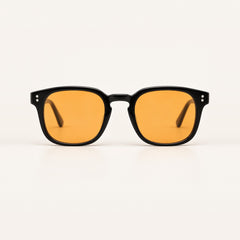
Deep amber lenses for the last two hours before bed. They block the blue and green light that holds back melatonin, the hormone that makes you sleepy.

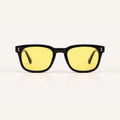
Pale yellow lenses for the hours you spend at screens and under LED panels. They take the harsh edge off blue light and keep colours easy to read.
The Noctis hour
Noctis goes on two hours before bed. Set your bedtime and the dial shows your window for tonight and every night, then add a reminder so you never miss it.
Your Noctis hour starts at 21:00.
Times use your device clock. The reminder adds a daily calendar alert; your bedtime stays on this device.
Reviews
—
Questions
Still curious? Write to us from the contact page.
Clear “blue light” lenses don’t do much at night: they only trim part of 400–450 nm. Amber lenses that block blue and green light are different. In a randomised trial, people who wore amber lenses for three hours before bed reported better sleep than people in yellow placebo lenses (Burkhart & Phelps, 2009), and a small 2018 study found the same for people with insomnia (Shechter et al., Journal of Psychiatric Research).
Put them on two hours before bed and keep them on until lights out: phone, TV, reading, all of it. If you wake in the night, put them on before you switch on a light.
Not after dark. Noctis is a tinted evening lens for indoors; don’t wear it for night driving. Sol is fine for daytime screen work.
Noctis is deep amber and blocks 99% of light from 400 to 550 nm, for the last two hours of your day. Sol is pale yellow and filters up to 90% of blue light from 400 to 480 nm, for daytime screens and LED offices.
The same frame twice: one pair with Sol lenses and one with Noctis. Choose “Day + Night set” on any frame’s page. It costs less than buying both pairs separately.
Not yet. Every Marsani frame is non-prescription today.
Wear them for 30 nights. If you’re not sleeping better, start a return within 30 days of delivery for a full refund. The details are in our refund policy.
More frames

 001
Noctis

 002
Noctis

 003
Noctis

 004
Noctis
The journal
Oct 26, 2026 · 2 min read
Astronauts see about 16 sunrises a day. To help them sleep, NASA replaced the station’s lights with LEDs that change colour through the day. Your home...
Read →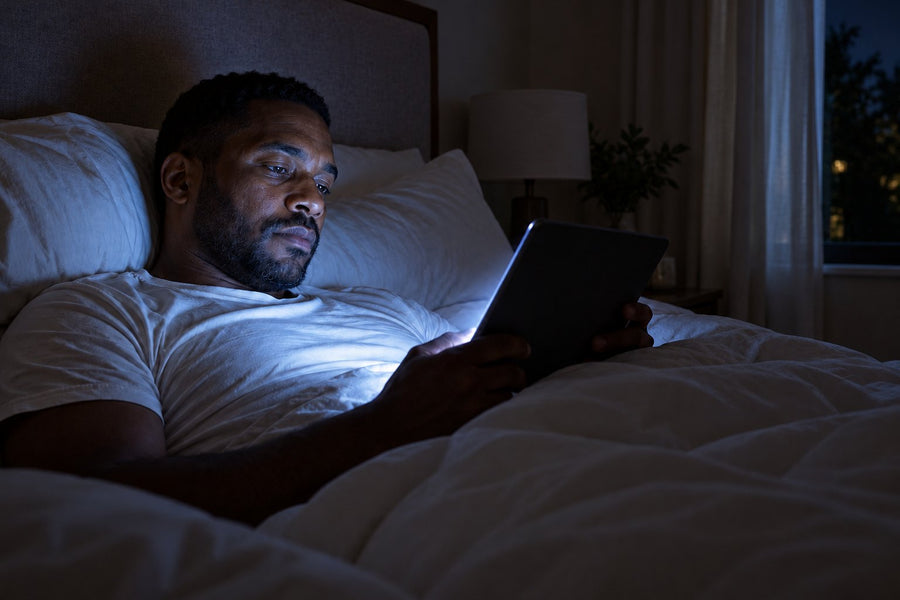
Oct 26, 2026 · 1 min read
Your melatonin starts rising about two hours before you fall asleep. That is exactly when most of us are lit up by phones, TVs and ceiling...
Read →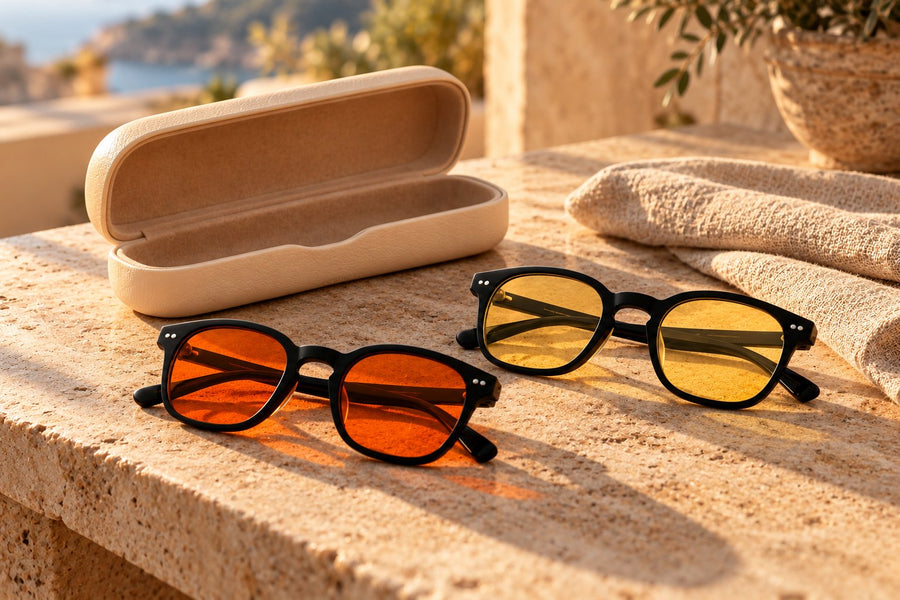
Oct 26, 2026 · 2 min read
Most “blue light” glasses are clear, and clear lenses stop short of the colour your body clock actually reads. Here is what the research says, and...
Read →